My Reading Journey Backwards and Forwards

Category: New Reads (Page 1 of 2)

Show Your Work

A Book about helping people find your work by Austin Kleon

May 8, 2025

May 8 When I’m struggling with posting my work, I always remind myself that no one is reading it anyway – so I can write anything I want. Spend any amount of time reading online advice and you come away with “post something every day”.
The message in this book is “Share” something every day. Uh oh, that’s a little harder.

But that’s the book, 10 Ways to share your creativity and get discovered. I’m not sure I want to “get discovered”. My anonymity is comforting – knowing no one is reading allows me to write. To wander and wonder –

I’m not sure I’m particularly creative either – it took me months to choose a paint color for my living room – and 3 years to find a picture to hang. My gardens are never up to snuff and I don’t have anything brilliant to say about the books I read.

And yet, without them …

That’s my project – documenting my reading journey – backward and forward. It’s the books that that brought me through my darkest days (well, the books and my therapist).

All kidding aside – for those of us without the amazing mentor, or therapist, whose parents and friends give bad advice, the books are always there.

Read them, use them, it helps.

On This Day in History

In 1945, World War II ended in Europe.

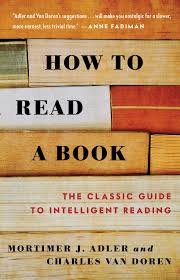
How to Read a Book

How to Read a Book – Mortimer Adler’s classic guide to intelligent reading

April 20, 2025

Housekeeping

I bought How to Read a Book back in 2018, and this is my third attempt to get through it. The first two tries didn’t get far—honestly, it felt nearly unreadable. But this time around, I’m not only interested, I’m finding it hard to put down. Perhaps because I’m not reading it start to finish, I’m reading what interests me most, which, at least today, was the end of the book and the beginning of the book.

Reflections and Random Thoughts

“People see what they are prepared to see.”
Ralph Waldo Emerson 1803 – 1852

April 26, 2025

I think it might also be said that people learn what they are prepared to learn.

Typically, when I feel there are gaps in my understanding of a book, I move on to the next book I think is related to what I’m trying to learn. This method of deeper, more analytical reading is new to me, and Adler’s method feels like a bit of overkill. But the proof is in the pudding, as they say – I don’t think I’d try this on more than 1 or 2 at most books in a year – but we’ll see.

Insights

Key Take-Aways

Something Actionable

So far, I’m about one-third of the way through this book, and I’ve highlighted 33 words that I either don’t know the meaning of at all or only vaguely understand. You’ll be seeing these in the vocabulary quiz(s) associated with this post – but looking them up and adding the questions is work! So you’ll have to give me a minute to finish.

My Rating

What Everyone Else Thinks

Amazon has given this book a rating of 4.5, with 73% 5-star reviews. The top reviewer had not even one original word to say about the book. Instead, he listed about 20 or so excerpts he found.

Post Progress

20%

Edit

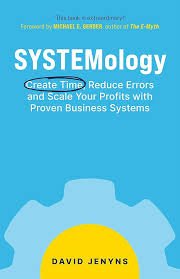
Systemology

April 14, 2025

A Book About Systemizing Your Business by David Jenyns and Michael E Gerber

Quotes from the Book

“that the primary purpose of SYSTEMology is to create space for the business owner – to systemise the business to the point where you can step away from the day-to-day operations and know with confidence that your business will continue to perform to your standards.”

Housekeeping

I can’t believe I didn’t post about this book back when I read it in August 2024. Systemology by David Jenyns was a quick, easy, and surprisingly impactful read. I’ve long admired Michael E. Gerber and read all his E-Myth books more than 20 years ago—in fact, I bought one of his courses back in the day when they still came in giant binders you had to make room for on your shelf. I wish I’d held onto those.


Reflections and Random Thoughts

Reading Systemology felt like a return to those core ideas from Gerber. What stood out to me most was his emphasis on simplicity. It isn’t about building some massive operation manual or turning it into McDonald’s.

It’s about capturing the minimum viable systems that keep your business running so that things don’t fall apart when you’re not in the room.

Insights


Key Takeaways

Minimum viable systems. For years, I’ve been cranking out long, overly detailed SOPs that no one, including me, could use. Thinking in terms of “just enough to work,” I’m starting instead with outlines (just what, not how) and flowcharts that are actually usable. And by usable, I mean we don’t get glassy-eyed when we try to read them.

You don’t have to systematize everything. This was liberating. Not everything in your business needs a flowchart or checklist. Focus on the 20% of systems that drive 80% of the results. It turns out (according to Jenyns) perfection is not only unnecessary—it’s kind of a trap.  We find this in a lot of discussions of perfectionism, don’t we?

Documenting doesn’t mean doing. Jenyns points out that you can—and should—get others to document what they do. This was a big aha for me. I don’t have to be the creator of every process. I just have to create the container for them to live in and keep the project moving.

You can start small. You don’t need a systems revolution. You need a small win. One system. One process. One chunk of chaos tamed. Then another. And another. This makes systemizing feel doable—even if you’re running in a million directions (as most of us are).


Something Actionable

My Ranking

Just a reminder: my rankings are based on how usable the book was for me—and I’ve put a lot of the concepts from this one into practice.

What Everyone Else Thinks

Post Progress

Progress

33%

I don’t get it – this is a hidden block? Why? What’s it for?

Edit

BooksNon-fiction

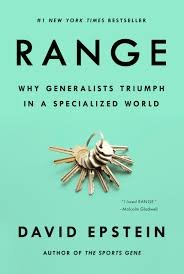
Range

A book about the benefits of generalizing over specialization by David Epstein

April 3, 2025

Reflections and Random Thoughts

June 1, 2025


Two Books, Two Approaches: A Quick Take on Range and 59 Seconds

I read two books this morning—Range by David Epstein and 59 Seconds by Richard Wiseman. Both challenge popular wisdom, but they do it in very different ways—and with very different levels of success.

Range is engaging, well-researched, and genuinely eye-opening. Epstein builds a compelling case for generalists in a world that often celebrates specialists. It’s the kind of book that doesn’t just repackage familiar ideas—it gives you new material to think about, to wrestle with, to apply.

59 Seconds, on the other hand, didn’t quite land the same way. To be fair, I only read the Shortform summary, so this isn’t a full review—but based on what I read, it felt more like a reframe than a revelation. The premise seems to be: “Here’s a popular idea. Now let’s disagree with it.” But the disagreement doesn’t always feel rooted in deep evidence—it’s more like a clever pivot than a clear debunking.

Maybe the full book makes a stronger case. But from what I saw, it felt less like overturning bad advice and more like presenting old advice in new packaging—with a contrarian spin.

Range made me think differently. 59 Seconds made me wonder if I was supposed to.


Housekeeping

I told myself—no more buying books until I finished at least a couple from my current stack. But this one pulled me in, probably because it flips the script on the idea that we have to specialize.

Key Take-Aways

Long-term retention, i.e., learning, is more likely to take place as a result of struggle as opposed to repetition.

Something Actionable

Review Title

What Everyone Else Thinks

Amazon has almost 12,000 rankings for this book, with an average score of 4.6. It has no 1-star ratings, and of the two-star ratings, a small percentage are, as always, people complaining about the condition of the book. Several of the negative reviews talk about the book being poorly researched – I went to Perplexity to see what I could find –

From Perplexity

Extensive Use of Sources: Epstein is noted for his diligence in research, often going directly to primary sources and journal papers. Approximately 30% of the book consists of notes and references, underscoring the depth of his investigation.

and

Breadth of Studies and Anecdotes: Epstein incorporates numerous studies, surveys, and historical anecdotes to support his arguments about the advantages of generalists in various fields. However, some reviewers have noted that while the volume of evidence is overwhelming, the lack of meta-analyses or deeper exploration into potential biases in study selection may limit the reliability of certain claims.

So there is that. Good Reads has almost 75,000 ratings for this book, with an average score of 4.13. As of April 2025, there are over 7,000 reviews.

Post Progress

60%

Edit

BooksNon-fiction

The Laws of Human Nature

By Robert Green

This link is the book summarized in 8 minutes by Robert Greene.

Reflections and Random Thoughts

Housekeeping

Mar 25, 2025

It looks like I purchased and started reading this book in July of 2021. It’s a 586-page book, and I read up to page 236 – now I’m deciding whether to start where I left off or start over.

March 26, 2025

I started over. I want to see if I recognize any changes I made as a result of what I’ve already read. Any new beliefs or behaviors?

April 9, 2025

I’ve re-read the first 100 pages or so and can safely say I remember practically nothing from my first read of this book.

Key Take-Aways

Chapter One

Chapter 1 is a discussion of our emotions and mostly irrational behavior –

Something Actionable

Review Title

What Everyone Else Thinks

Laws of Human Nature has over 16,000 ratings on Amazon and 131 reviews, 87% of which are five stars. Here is a link to the top 1-star and top 5-star reviews. The top 1-star review was well written, and the author is a Robert Greene fan, so there is that.

As usual, several of the critical reviews were complaints about the book’s physical condition when it arrived.

On Good Reads there are almost 26 thousand ratings and over 2000 reviews. The score is 4.36 and as of this writing there are over 17,000 people currently reading this book.

Edit

BooksNon-fiction

The Choice

A memoir by Holocaust Survivor Dr. Edith Eva Eger

March 23, 2025

Housekeeping

This book was on Ryan Holiday’s 2025 Recommended Reading List – and I purchased it from his bookstore, The Painted Porch.

Reflections and Random Thoughts

Insights

Key Take-Aways

Something Actionable

Review Title (star rating)

What Everyone Else Thinks

Edit

BooksNon-fiction

High Performance Habits

Aug 3rd 2024 (This is when I bought it)

A book about improving performance by Brendon Burchard

Reflections and Random Thoughts

Insights

Key Take-Aways

Something Actionable

Review Title

What Everyone Else Thinks

Thinking In Systems

March 3, 2025

A Book about systems thinking by Donella Meadows

Reflections and Random Thoughts

I’m afraid I didn’t take much of value from this read. Her political agenda was woven throughout, and I found it more distracting than enlightening.

Quotes from the Book

In fact, we don’t talk about what we see; we see only what we can talk about. Our perspectives on the world depend on the interaction of our nervous system and our language—both act as filters through which we perceive our world.”

This next quote, according to Amazon, was highlighted by over 15,000 Kindle readers;

“Purposes are deduced from behavior, not from rhetoric or stated goals.”

Key Take-Aways

Something Actionable

My Rating

What Everyone Else Thinks

4.6 out of 5 Stars on Amazon.

A Top 5 Star Review

There are a few books that encapsulate a way of thinking so simply, so clearly and so compellingly that I find myself giving little kisses of delight to the cover. I read this on a Kindle, so this resulted in quite a lot of smudging. (this was a long review so you can read the rest here if you are interested)

A Top 1 Star Review

I got this book because we develop systems for patient compliance, the reviews were high, and I was eager to learn from such an expert of high acclaim. In fact, the book is a superficial collection of high-level ideas with little to no added value or insight. The book is a spectacular example of what Feynman called “cargo science”. Do meaningful, not just quantifiable. Indeed. The book is also heavily influenced by the author’s environmental agenda, which should be disturbing to anyone with an engineering or physics education used to system analysis. Read Bellman’s classic “Adaptive Control Processes – A guided tour” for real thought and insights on systems.

262 people found this helpful

Post Progress

55%

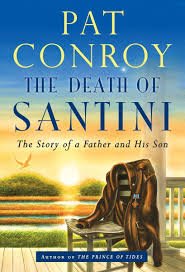
The Death of Santini

The Story of a Father & His Son by Pat Conroy

Worth the Read?

Reflections and Random Thoughts

Key Take-Aways

Redemption and forgiveness are possible even in the most difficult of circumstances.

Something Actionable

What Everyone Else Thinks

This book holds a 4.3 rating on Amazon, with only 60% of reviewers giving it five stars. On Goodreads, the rating dips even lower to 3.9 from over 9,000 reviews.

I was surprised! I loved this book and got teary reading it more than once – half a dozen times, really. I am in awe of his mastery of the English language and his ability to write with such candor and grace about such a difficult topic.

I turned, as I often do, to the 1 and 2 start reviews to see what other people didn’t like. It seems some folks find him a bit tedious and whiny.

I find that kind of review somewhat tedious and whiny. At least Pat Conroy had something to whine about –

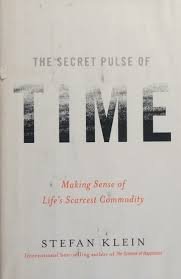
The Secret Pulse of Time

A Book about Life’s Scarcest Commodity By Klein Stefan

Reflections and Random Thoughts

When does now end?

“How long does the present last?”

I started this book in February 2024 and finished it in December 2024. I’m not sure it lives up to its name, but it was worth reading. It seems like it was mainly about the relativity of time when it goes slow and when it goes fast. He also talked about time and memory.

While reading it, I paid more attention to how I was spending my time; it got harder to enjoy playing my game – I tried considering what value the hour I had just lived had to me. What did I remember of it?

Insights

Key Take-Aways

As I read this book, I find myself paying more attention to how I spend my time – considering more seriously if I’m willing to give my life to the activity I’m engaged in.

Everyone says that time is money, but it isn’t.

Recollections vs Memory

According to this book, children acquire their first conscious recollections at about 18 months.

A recollection is not the same as a memory; I looked this up because I thought they were the same and replaced the word recollection in the sentence above with memory, rendering it inaccurate.

Recollection is the active process of retrieving specific memories, while memory is the system or ability to remember something, which begins to develop in humans at birth. A baby can recognize its mother’s face within 2 hours.

Something Actionable

This is a stop doing. Stop spending so much time playing my phone game.

Especially during times, I could be doing something I can see later.

What Everyone Else Thinks

This book only has 82 reviews on Amazon, 3% 1 star and 62% 5 star. On Good Reads, it has 23 ratings, an average of 4.17, and only three reviews.

Looking at the 1-star review on Amazon, I see that it’s a complaint about formatting with no discussion of content.

« Older posts

© 2026 Vienna's Views

Theme by Anders NorenUp ↑